Book an AI strategy call
CLIENT RESULTS

A course that can change every day without changing the course a learner is taking.

Nexus Drivers Ed sells four Texas course paths to six audiences and issues state certificates on completion. Conventional learning platforms treat a course as a single live structure, so every edit risks breaking an enrolled learner’s progress, and the link between the certificate and the course it certifies. Nexvix built four applications around one rule instead.

Regulated educationLearning platformBilingual EN / ESContent versioningCertificates
AT A GLANCE

The engagement, in six facts.

Every figure on this page is the brand’s own published reporting or a countable property of the platform. Nexvix does not publish a client metric without permission.

Book an AI strategy call
Client
Nexus Drivers Ed, Plano, Texas
Sector
State-approved online driver education (TDLR-approved, DPS-recognised)
Platform
Four applications: marketing site, learner portal, operations admin, central API
Audiences
Adults 18–24, adults 25+, teens, parent-taught families, Spanish speakers, first-time permit applicants
Languages
English and Spanish, held at parity
Status
Live
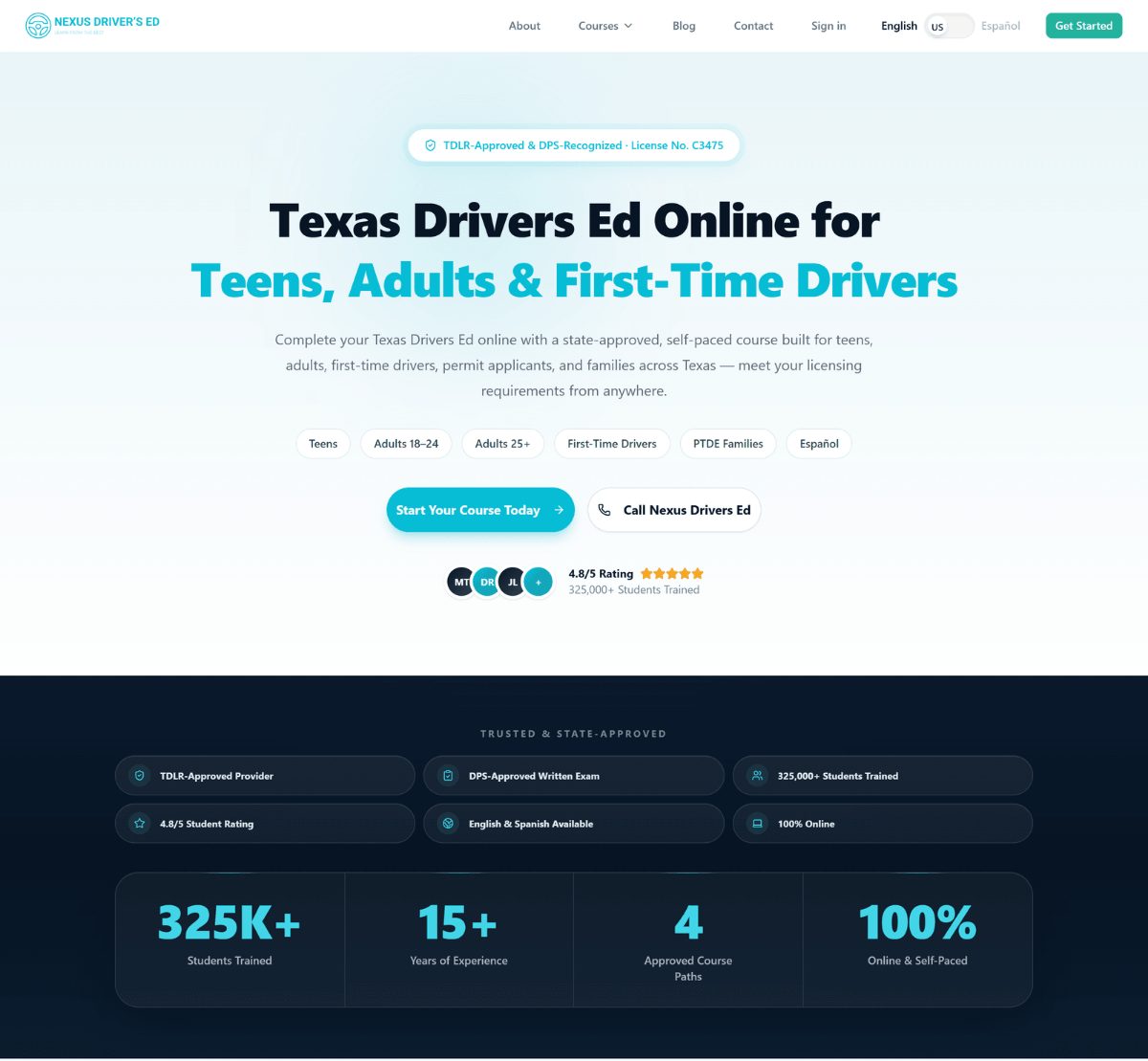
The marketing site homepage and trust bar: the TDLR / DPS badge, the six audiences and the brand’s own figures, read straight from the live site.
The marketing site homepage and trust bar: the TDLR / DPS badge, the six audiences and the brand’s own figures, read straight from the live site. CLIENT APPROVED

THE SITUATION

Content that must change, against records that must not.

A compliance constraint, not a feature request. It shaped the whole build.

Driver education is not a hobby course. When a learner finishes, the provider issues a state certificate that a licensing office will rely on. The certificate has to be traceable to the exact course the student took: which lessons, which exam, which pass mark, on which version of the material. “We changed the course last month” is not an acceptable answer to a licensing question.

Off-the-shelf platforms share one failure mode. A course is a single live structure that editors change in place, and a learner’s progress is a position inside that list. The moment an editor inserts a lesson, reorders a chapter or removes a quiz, every enrolled learner’s saved position quietly changes meaning: some get stuck on content that no longer exists, some are marked complete on content they never saw, some find their course rearranged under them mid-way.

For a hobby platform that is an annoyance. For a state-approved provider it is a compliance exposure: the course a learner certifies against is no longer the course they were taught. The brand had already lived through it.

The second constraint was parity. The Spanish course is not a translated brochure; it is a full course that must earn the same certificate and behave identically on every screen.

A mutable syllabus and a stored position cannot coexist safely. That is the problem the platform was built to remove.

SYSTEM DESIGN, WEEK 2

THE PRODUCT LINE

Four course paths, six audiences, one catalog.

Texas does not have one driver-education course. Each path is tied to a different legal requirement, a different certificate and a different buyer, and the marketing site reads all of them from the catalog the API publishes.

ADULT

Texas 6-hour adult drivers ed

Adults 18–24 who must complete an approved adult course, and adults 25+ preparing for or bypassing the DPS written test. Issues the ADE-1317 certificate with the DPS-approved written exam included.

TEEN

Texas teen drivers ed

Teens beginning the licensing process with the online classroom portion. Issues the DE-964 certificate used to apply for a learner licence.

PTDE

Parent-taught driver ed

Families who complete the classroom portion online while a parent leads behind-the-wheel practice. Eleven milestones, finishing in a timed final exam drawn from a question bank.

ESPAÑOL

Curso de 6 horas para adultos

The full adult course in Spanish, earning the same certificate as the English course, not a translation layered over an English original.

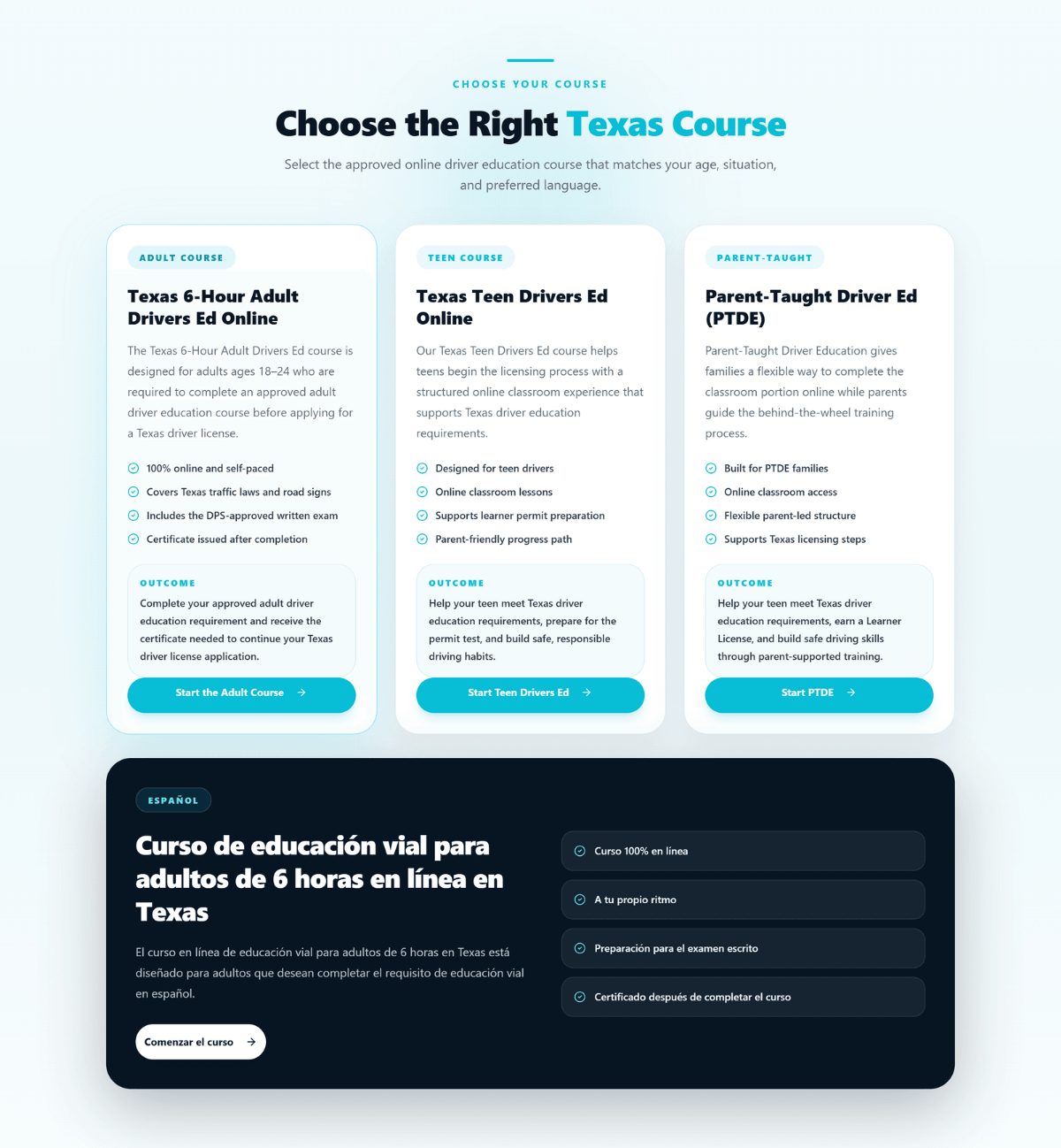
The course-path section: three English course cards and the featured Spanish adult course, all fed from the catalog the API publishes.
The course-path section: three English course cards and the featured Spanish adult course, all fed from the catalog the API publishes. CLIENT APPROVED
THE PRINCIPLE

A published course is never edited. It is superseded.

Learners already enrolled finish the revision they started; learners who arrive after a publish receive the new one. Three independent layers make that real, and each one deliberately knows nothing about the others.

01STRUCTURE

Course revisions freeze the shape

Every course belongs to a family. A draft is a complete copy of the structure; lessons and assessments carry over by stable identity. A Validate action runs every publishing rule and reports plain-language remedies, not error codes.

Opened by a person
02CONTENT

Lesson versions freeze what it says

Each publish writes an immutable, checksummed content version including a complete copy of every embedded quiz. A learner is pinned to the version they first opened, and quiz answers are scored against that version.

Handled by the system
03EXAMS

Definitions and attempt snapshots freeze the rules

Publishing an assessment freezes the pass mark, time limit, attempt allowance, review policy and selection logic. Starting an exam snapshots the exact questions and their order with the attempt.

Handled by the system
04PUBLISH

Told who is affected, before anything changes

Before any publish or delete, the editor sees two panels side by side: what happens to learners who are already here, and what happens to learners who arrive after this.

Approved by a person
DEMONSTRATION
AUTHORING AND OPERATIONS

The interface only ever offers what the rules allow.

Editors never have to remember the versioning rules, because a published revision simply does not open as an editable form.

Course authoring follows the curriculum hierarchy exactly: a course is a sequence of milestones, a milestone holds chapters, assessments and to-do items in order, a chapter holds lessons, and a lesson carries text, video or audio content plus optional embedded quizzes. Every structural page is revision-aware: a draft is fully editable and carries a reminder that nothing reaches a learner until publish; a published revision renders as a read-only outline with the reason stated.

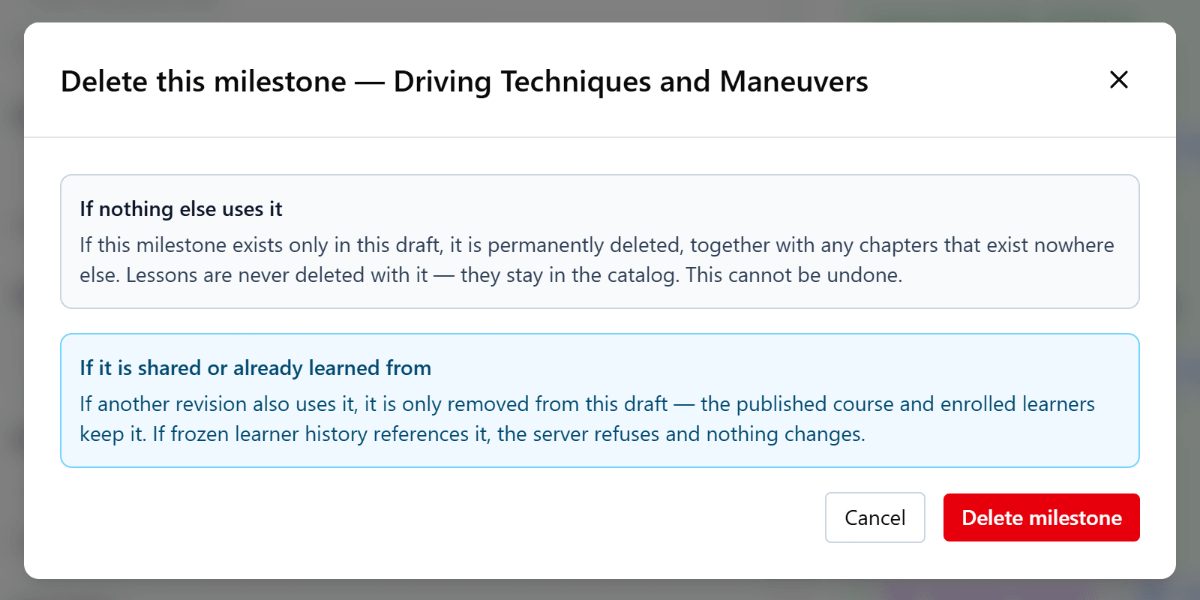
Deletion needed its own rules. When an editor deletes a row from a draft the platform decides what that means per row and says which outcome applied: a row born in the draft and seen by no learner is removed outright, a row shared with a published revision is detached from the draft only, and a row any learner’s history references is protected: the deletion is refused and nothing changes.

What operators get

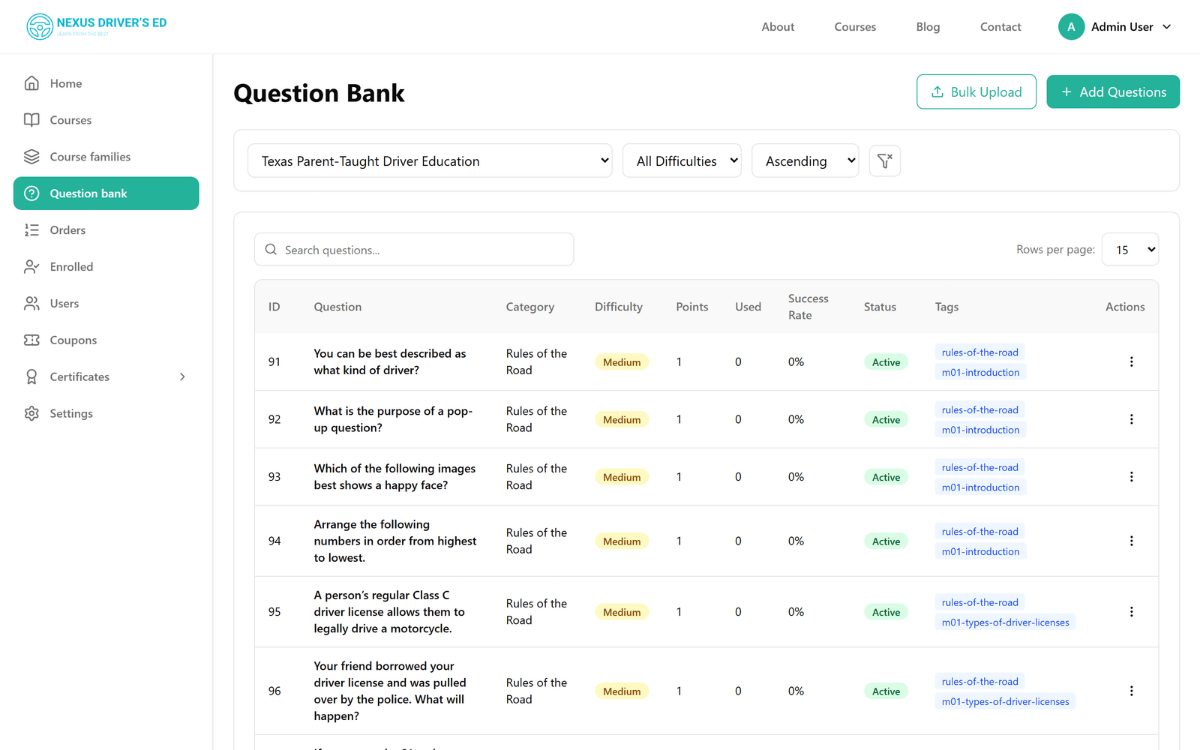
  • Question banks scoped by course, milestone, chapter and lesson, with bulk upload.
  • Commerce: card checkout, coupons, refunds and automatic reconciliation when payments and enrolments disagree.
  • Texas certificate production with the right fields, school numbers and control numbers, and a DPS copy alongside the student copy.
  • Analytics on who is enrolled, who is stuck, who has passed and which courses perform.
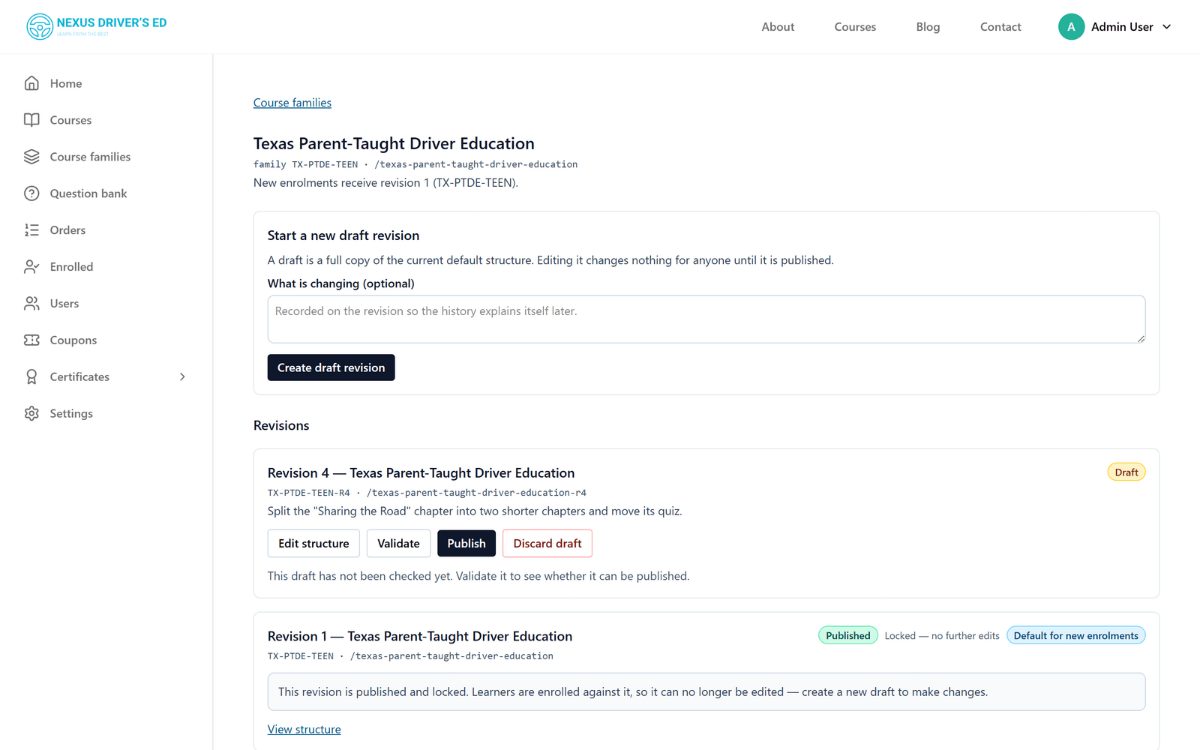
A course family with an open draft (revision 4) beside the published, locked revision 1 that new enrolments still receive. The draft records why it was opened.
A course family with an open draft (revision 4) beside the published, locked revision 1 that new enrolments still receive. The draft records why it was opened. CLIENT APPROVED
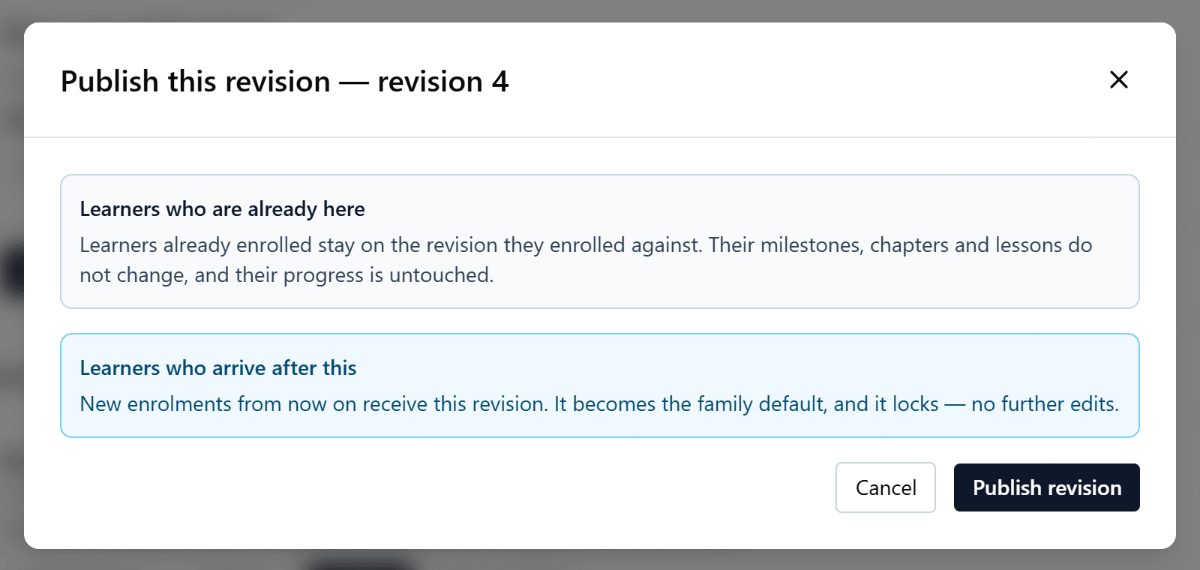
The publish confirmation. Before anything changes, the editor is told what happens to learners who are already here and to learners who arrive after this.
The publish confirmation. Before anything changes, the editor is told what happens to learners who are already here and to learners who arrive after this. CLIENT APPROVED
The delete confirmation for a milestone in a draft: what happens if nothing else uses it, and what happens if it is shared or already learned from.
The delete confirmation for a milestone in a draft: what happens if nothing else uses it, and what happens if it is shared or already learned from. CLIENT APPROVED
The question bank, scoped to a course and filtered by difficulty, with per-question usage and status.
The question bank, scoped to a course and filtered by difficulty, with per-question usage and status. CLIENT APPROVED
THE LEARNER JOURNEY

Mobile-first, bilingual, and quiet about all of it.

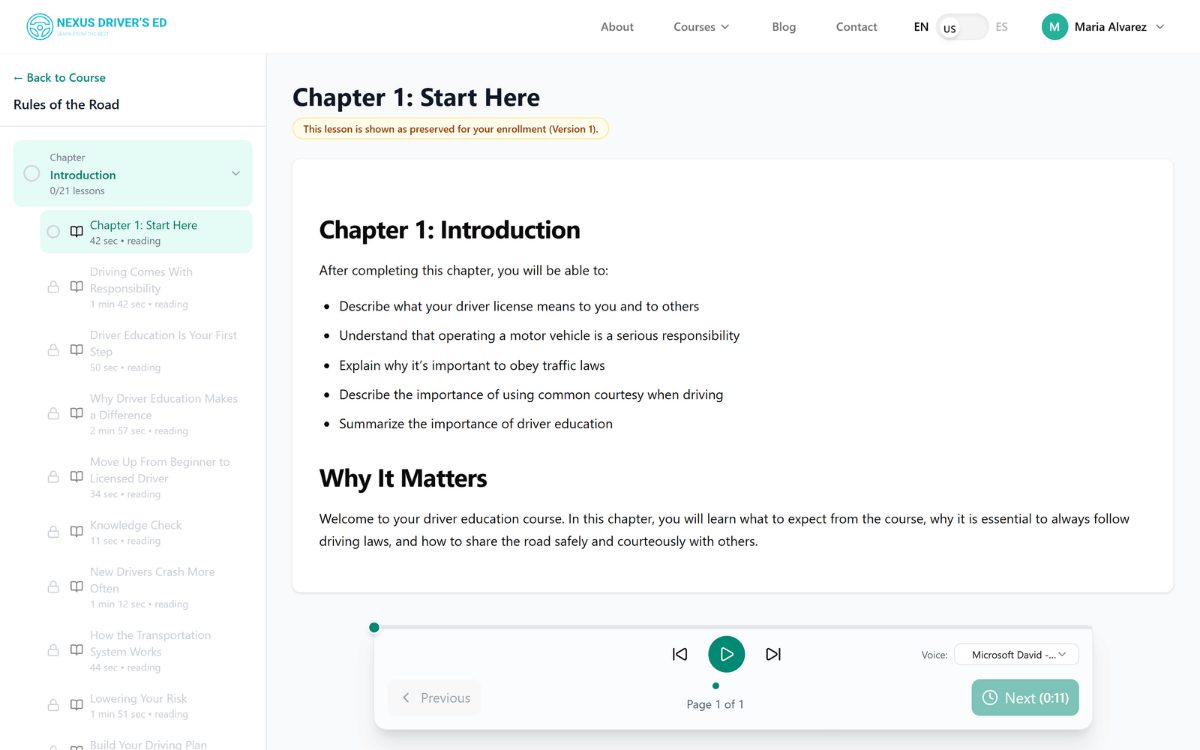
A learner signs up, works through sequential lessons with pacing timers and embedded quizzes, sits a timed final exam and downloads the state certificate. The versioning is almost invisible: a small plain note says whether they are seeing content preserved for their enrolment or the current live content, and nothing more.

A lesson in the learner portal: chapter objectives, the pacing control and the sequential next-lesson gate.
A lesson in the learner portal: chapter objectives, the pacing control and the sequential next-lesson gate. CLIENT APPROVED
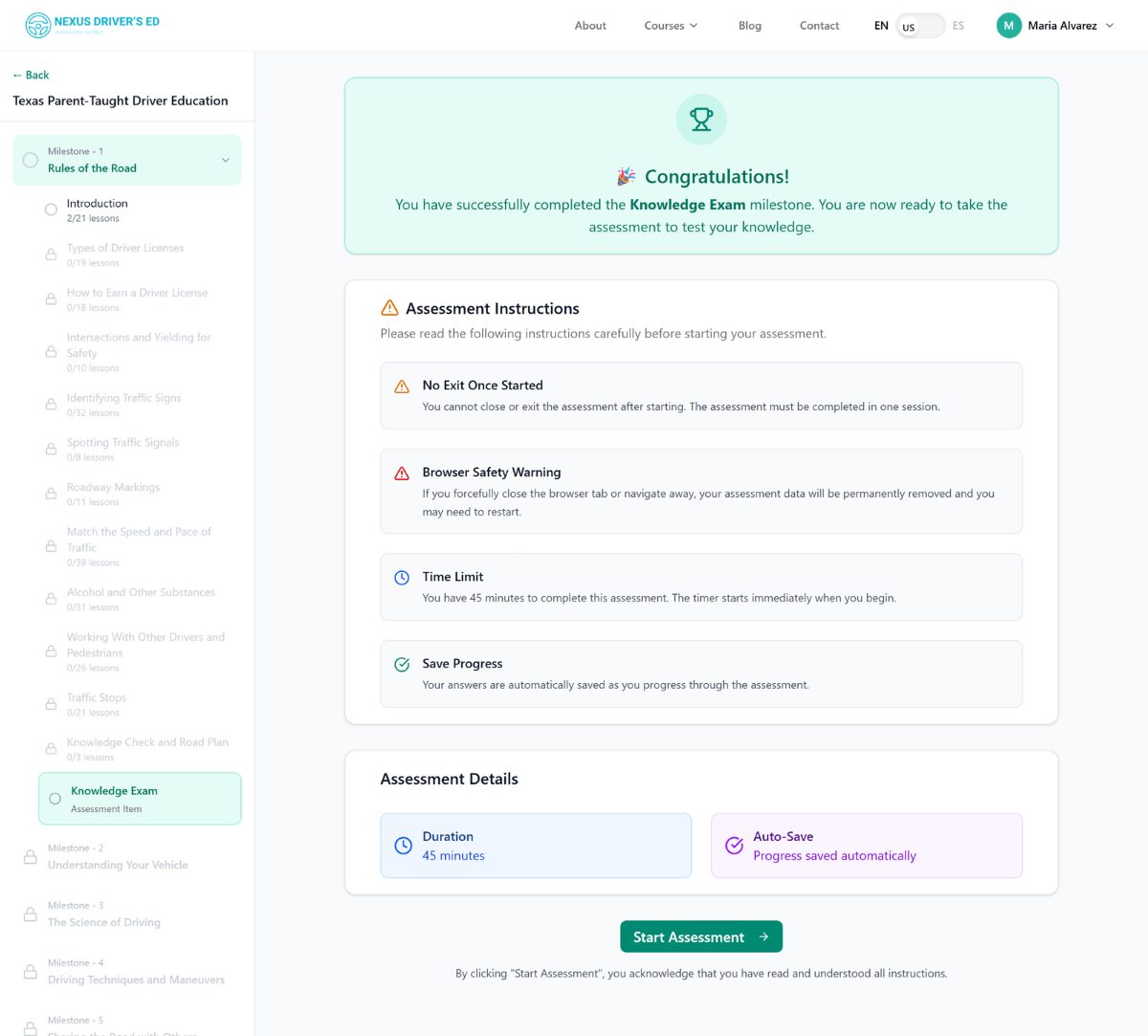
Completion and the assessment gate, with the knowledge-exam details shown before the attempt is started.
Completion and the assessment gate, with the knowledge-exam details shown before the attempt is started. CLIENT APPROVED
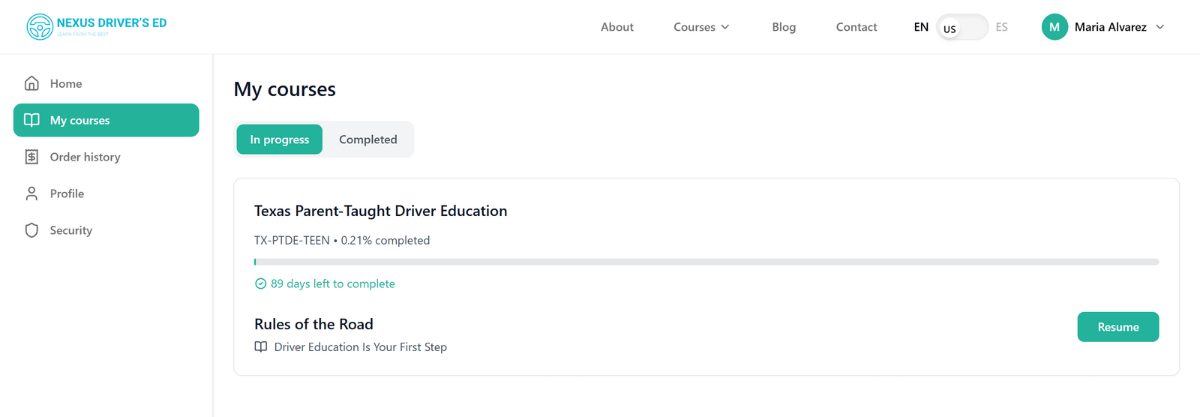
My courses: progress against the enrolled revision, with the completed tab beside it.
My courses: progress against the enrolled revision, with the completed tab beside it. CLIENT APPROVED
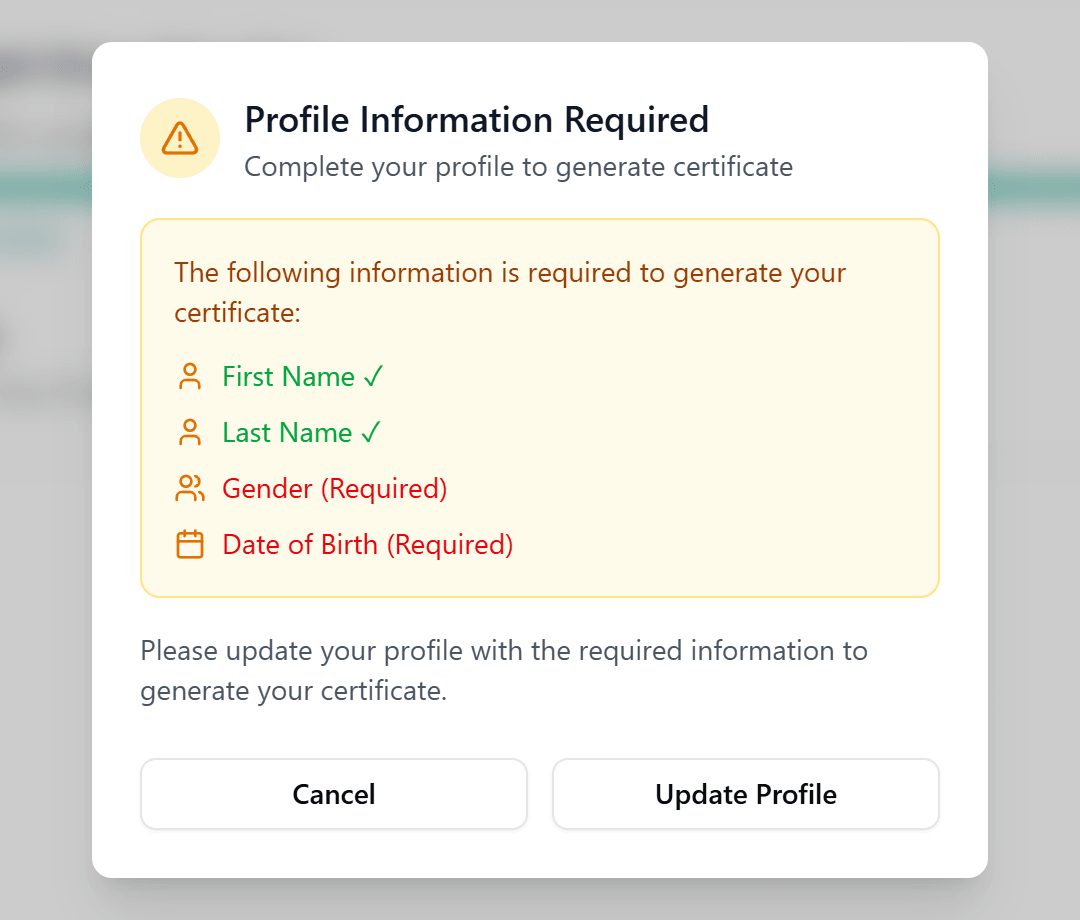
Certificate generation refuses to run on an incomplete profile, and names the exact fields it still needs.
Certificate generation refuses to run on an incomplete profile, and names the exact fields it still needs. CLIENT APPROVED
DELIVERED

What was handed over.

MARKETING

Public site on the live catalog

Course catalog, regulatory explainers, FAQ and search presence. Prices and course details are read from the API, never copied by hand.

PORTAL

Bilingual learner portal

Sign-up, checkout, sequential lessons, pacing, quizzes, timed final exam, progress and certificate. Mobile-first.

ADMIN

Operations console

Revision-aware authoring, plain-language validation, question banks, media, orders, coupons, enrolments, certificates and analytics.

API

One source of truth

Who may edit what, which version a learner sees, whether an attempt counts, whether a payment is complete: all decided here, never in a browser.

Runs on

  • Laravel 12, MySQL 8, Redis queues
  • React 19 portal and admin, Next.js 15 marketing site
  • Stripe Checkout with webhook confirmation
Containerised, with roughly a thousand automated API tests running on every change.

One codebase, two brands

  • Nexus Drivers Ed
  • ADI Best Drivers Ed
Brand is a deployment setting; the whole palette is derived at runtime from one brand colour.

Ownership

  • Code and data with the client
  • Test suite handed over
  • Operating guide
The client team publishes revisions without Nexvix.
MEASURED OUTCOME

What the platform delivers.

The first two figures are the brand’s own published record over fifteen-plus years. The third is a countable property of the delivered system.

325,000+
Students trained
The brand’s own published figure, over 15+ years
4.8
Student rating out of 5
The brand’s own published figure
~1,000
Automated API tests
Run on every change before it reaches a learner
A curriculum change stopped being a risk and became a routine release.

Freedom to improve the course every day, and a guarantee that every learner finishes exactly the course they started and certifies against exactly the exam they sat. The trade-off, more moving parts on the server, is hidden from editors and learners alike, who see only a calm, predictable product.

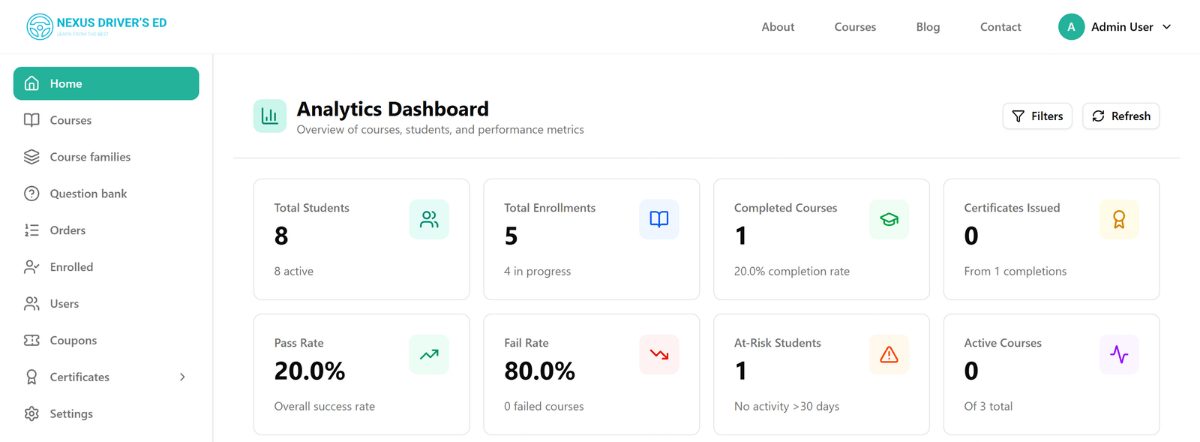
The analytics dashboard: enrolments, completions, certificates issued, pass rate and active courses in one operations view.
The analytics dashboard: enrolments, completions, certificates issued, pass rate and active courses in one operations view. CLIENT APPROVED
WORKFLOW AUDIT

The next case study is somebody’s workflow today.

One call, thirty minutes. Nexvix maps the process, names the measurable outcome and tells you whether a system is worth building. If it is not, you will hear that instead of a proposal.

A written workflow map you keep either wayA named measurable outcome, not a feature listA direct answer if the system is not worth building