Recorded and held
A pending row and a temporary id are written, the cost of that operation type is reserved as a hold, and the screen is answered at once. Subscription credits are drawn before purchased ones.
Handled by the system Book an AI strategy call
Space and Light Digital has shot fashion e-commerce in Los Angeles for more than ten years. It wanted to sell what it knew: a brand’s garment on a photorealistic model, at print resolution, in minutes, without a shoot. The brief was one AI model. The business needed a platform, so Nexvix built one, on a single principle: every generation is a job, never a request.
Fashion e-commerceAI product engineeringServerless GPUSubscriptions and creditsNative 4KEvery figure on this page is a countable property of the delivered system or a claim the studio publishes itself. No performance estimate is invented.

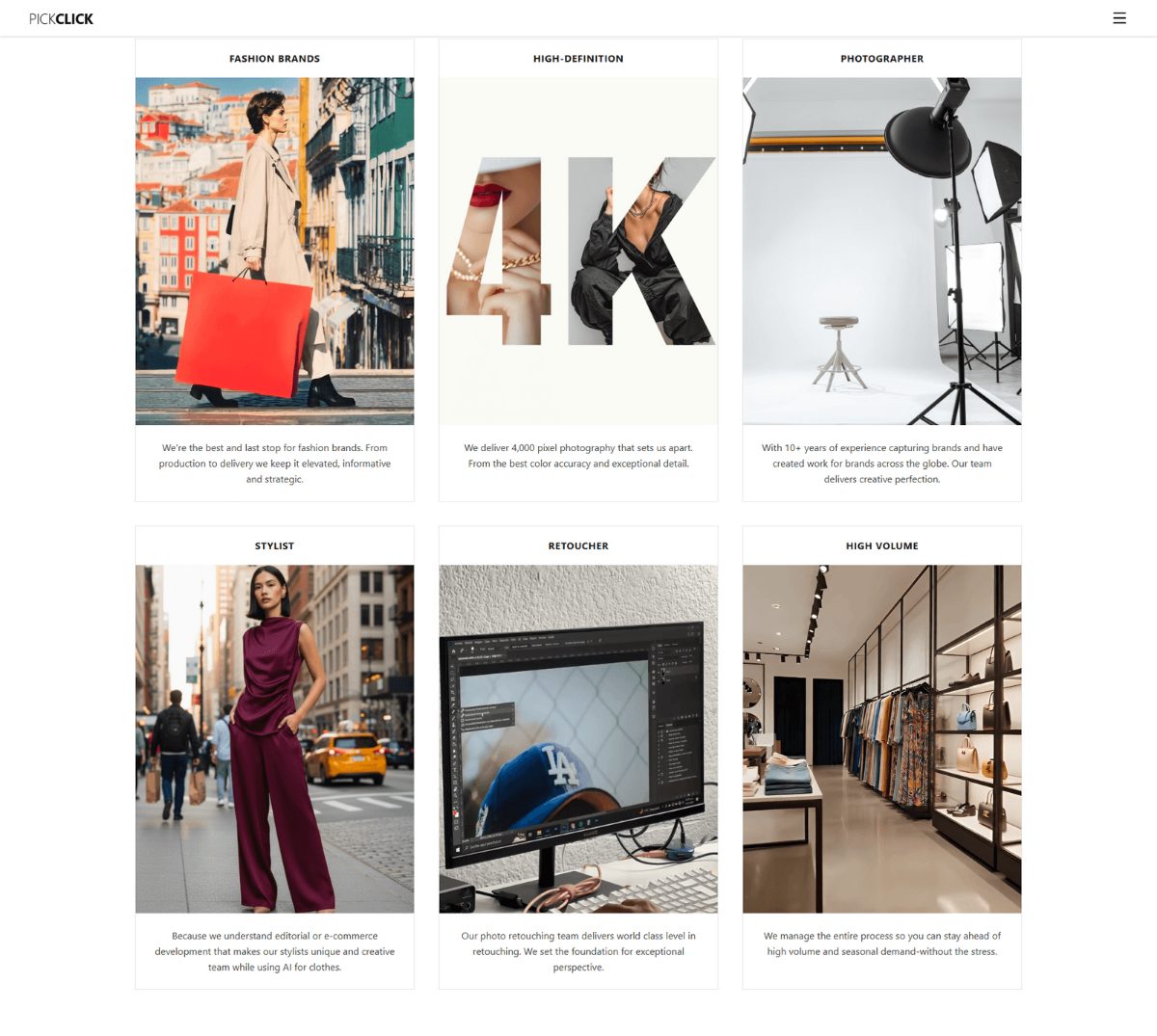
A decade of production told the studio exactly where generic AI imagery fails a product page.
The studio’s business is the product page: ghost mannequin, flat lay and on-model imagery at four-thousand-pixel resolution, shot under the lighting setups large retailers standardise on. The lighting is standardised. The poses are a known set. The model changes, the garment changes, and everything else is craft that could be encoded.
But a fashion product image has to be true, not merely pretty. The garment must survive generation (fabric texture, print alignment, seams, drape and colour), because a buyer returns a dress that does not look like the picture. The model must be the same model across every angle, or a brand’s catalog falls apart. Hands, fingers and joints must be right. Swimwear and lingerie are a large part of the category and are exactly what most AI services refuse or degrade. And it all has to work on a phone, because brand teams review between meetings.
A generic stack could not hold that. A generation call takes thirty seconds to several minutes on a GPU; a web application that blocks on it locks up and cannot scale. Credits charged before the result comes back mean paying for failures. A single GPU server idles at night and saturates at noon. And a pipeline with the model, the workflow and the application code tangled together cannot be improved without redeploying everything.
The original brief was one dedicated AI model and a try-on system. The business needed a platform.
SCOPE RECONCILIATION
Each part has a single audience and a single job, and the compute-heavy part is isolated so a surge of generation jobs can never slow down a page load.
The marketing site is the public face. It carries the positioning, the model catalogue with a page per model, the plans and the path into the portal. Its home page is assembled from content sections the admin edits through the platform’s own API, so the studio can change its story without a developer, and the pages are server-rendered and cached.
The creator portal is where brands work: sign-up, plan selection, the try-on wizard, live job status, output review, history, custom models, credits and billing. A multi-step wizard keeps state locally so a refresh never loses a creator’s place, and a live socket carries job progress with polling underneath it.
The admin is the operations console: the model catalogue, plans and their features, credit packs, add-ons, configuration and the content sections that drive the marketing site.
The API is the single source of truth: authentication, subscription state, credit balances, the job lifecycle, webhook handling and real-time status, never decided in a browser. A separate background worker consumes ten queues for everything that should not happen inside a request.
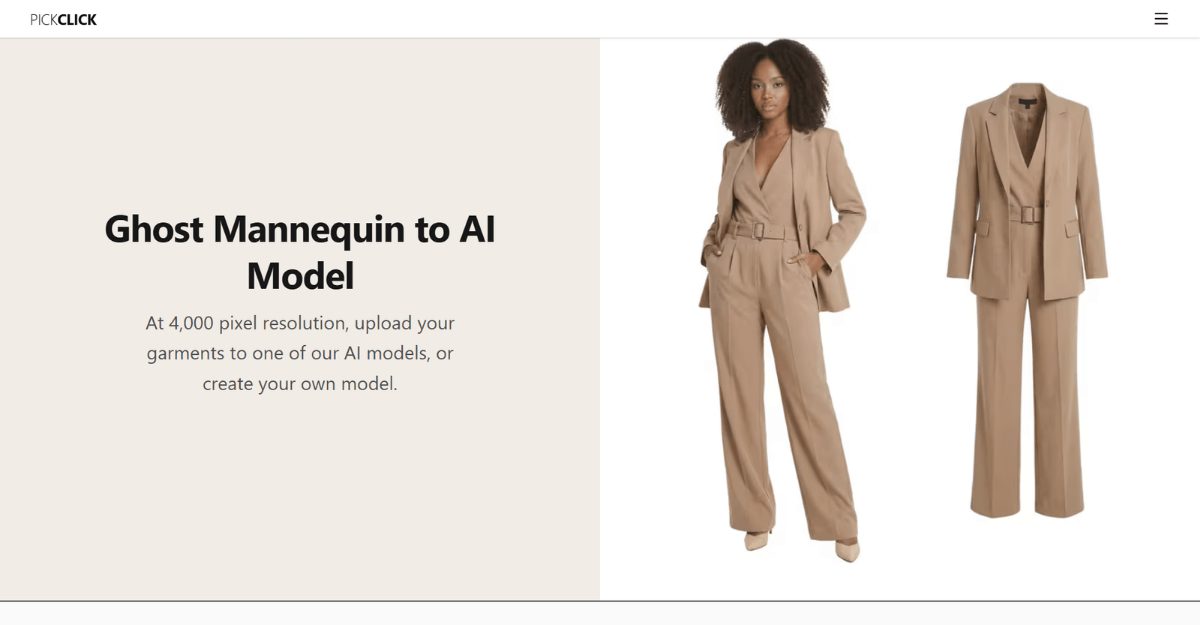

The moment a creator clicks, the API records the job, reserves the credits it will cost, hands the work to the GPU platform and answers the screen within milliseconds. Nothing in the user-facing system waits on a graphics card.
A pending row and a temporary id are written, the cost of that operation type is reserved as a hold, and the screen is answered at once. Subscription credits are drawn before purchased ones.
Handled by the systemThe backend selects the versioned workflow template for the use case and substitutes only the documented image slots. The platform cold-starts a worker if needed and scales to zero when the queue empties.
Handled by the systemThe webhook is logged before anything else happens to it. On success the hold converts to a deduction; on failure it is released and nothing is charged. Every movement is a written transaction.
Handled by the systemA second vision model is asked whether a visible, correctly dressed model is present and the garment is intact. A result that fails can be regenerated automatically, up to a configured limit, before the creator is told.
Approved by the system, then a personEach layer is owned by a different thing, so a change in one does not require a change in the others. Payload templates are the contract between the top layer and the bottom three.
Knows that a bikini try-on uses one recipe and a blazer another, which image goes in which slot, and how to read what comes back.
Creates workers when jobs arrive, scales them with demand and to zero when idle, and posts each result to the webhook the backend named. The studio pays for GPU seconds actually used.
CUDA and PyTorch base, system libraries, preinstalled Python dependencies and a small job handler. Deliberately thin.
The workflow engine, its custom nodes and every model checkpoint. The studio can upgrade a model or add a node without rebuilding or redeploying the image.
Credits are the point where the business meets the engine, and the whole ledger is designed around one rule.
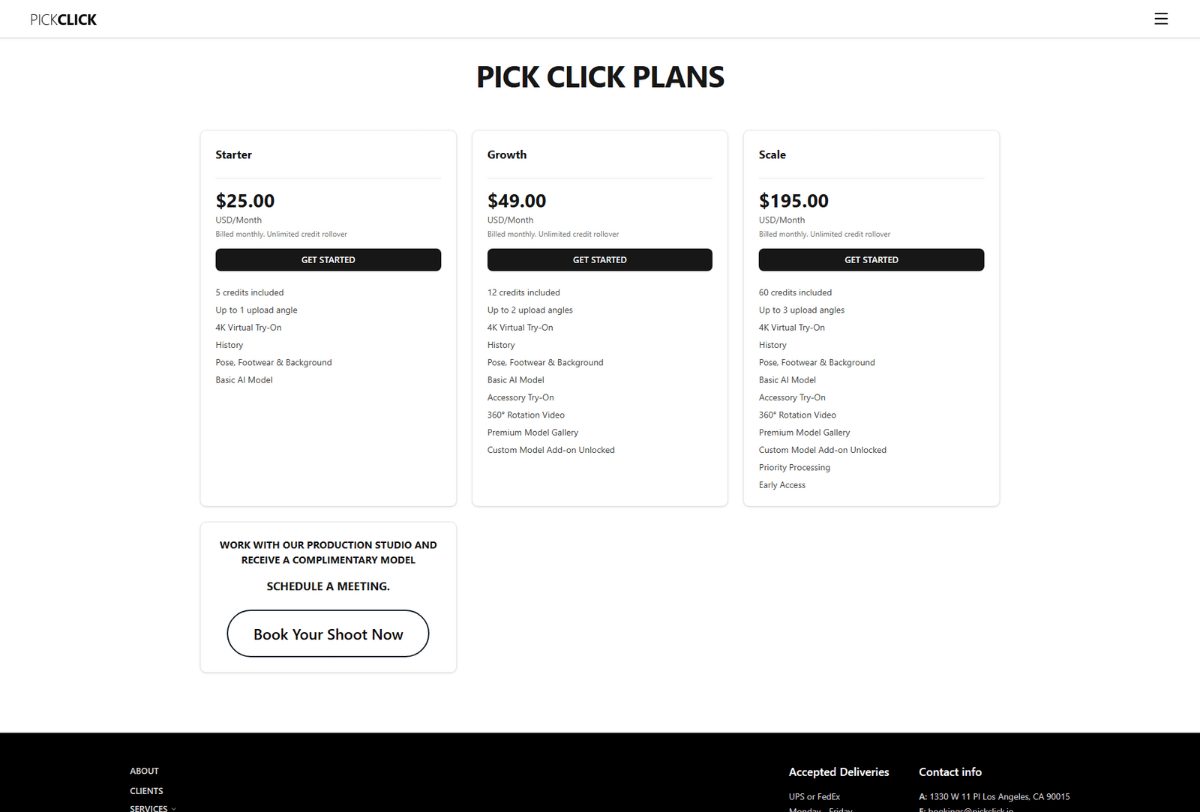
Three monthly plans (Starter, Growth and Scale) all speak the same currency. A plan grants an allowance and a set of features; higher tiers add upload angles, accessory try-on, 360-degree video, the premium gallery, priority processing and the ability to unlock a custom model. Plans, features and allowances are defined in the admin, not in code, so the studio can change pricing without a release.
Feature access is enforced in two places that always agree: the API checks a plan-feature guard on every gated route, and the portal reads the same feature list and simply does not show what the plan does not include. A creator who reaches a locked feature is taken to the plans page rather than shown an error.
Two nightly jobs keep the ledger honest: one expires credit packs past their one-year life, the other recalculates every creator’s extra-credit balance from the packs that back it and corrects any drift. Both run in the single worker process, precisely so they can never run twice.
The studio can price by outcome rather than by attempt, which is what a brand expects from a studio, and when a creator asks why their balance is what it is, the answer is a list of transactions, not a guess.
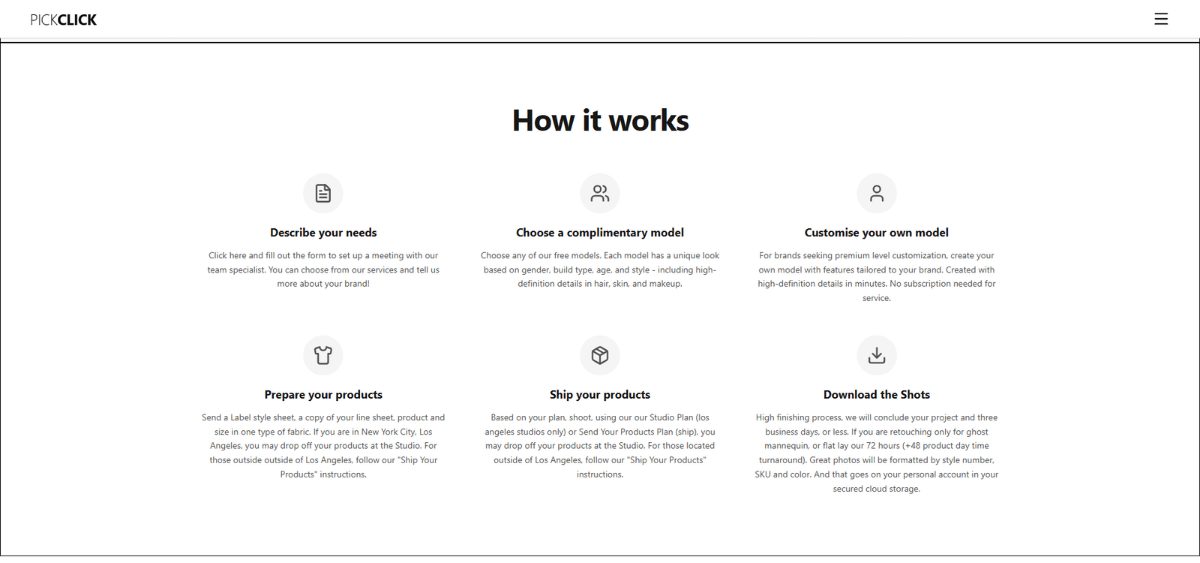
Choose the outfit type, upload the garment from the angles the plan allows, choose a model, a pose, the outfit combination and a background, then confirm a summary. Progress is saved locally at every step, so a creator who closes the tab or switches from laptop to phone picks up where they left off.
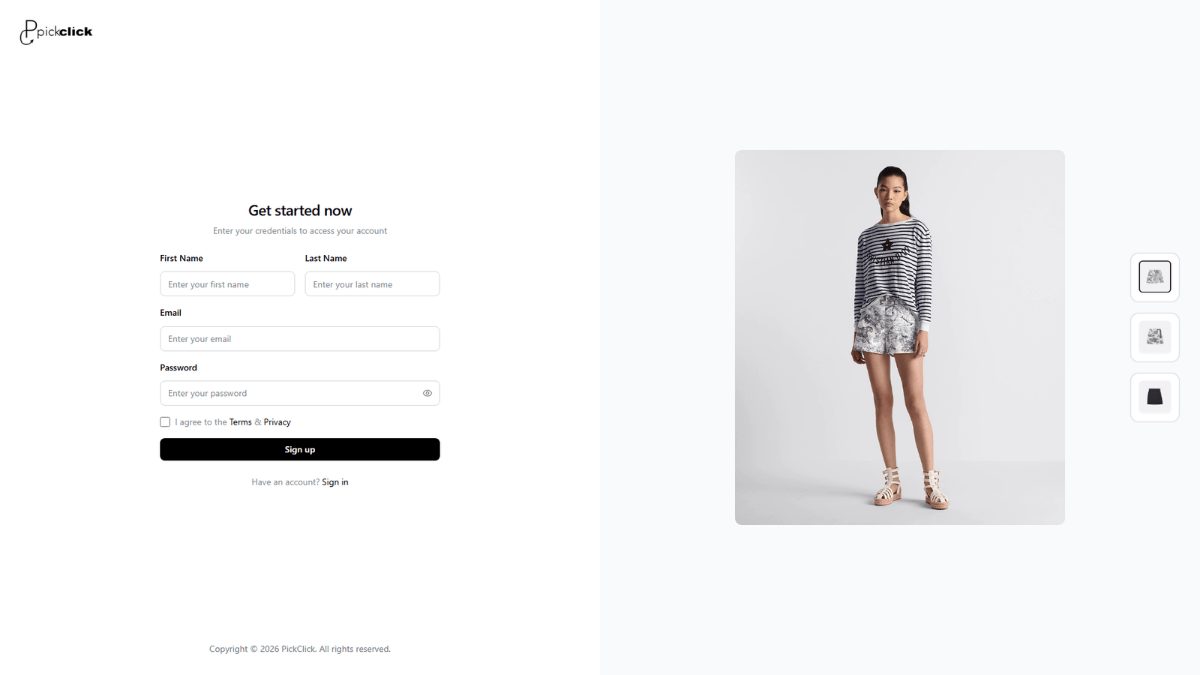
One-piece, two-piece and multi-angle input, with full-fidelity swimwear and lingerie handled by consent-safe synthetic models.
A rear view generated from the front, then front-to-back and back-to-front segments combined into a smooth rotation with the garment following the body.
Described in attributes or built from a reference image, then produced as hero, front, side, back and headshot and published to a private library.
Balances shown separately with expiry dates and a transaction history; plan changes, cancellation, reactivation and invoices in one place.
The final reconciliation mapped each contractual item to what shipped. These three are counted properties of the delivered platform, not performance estimates.
The custom-model system with a private library per creator, accessory try-on for jewelry, full-fidelity swimwear and lingerie, and a mobile-optimised web application that removed the need for a native app at launch.
Each with a character persona, voice design, portfolio assets and dedicated video, plus a master video featuring all eight. Face synthesis moved to a three-dimensional-aware representation across angles.
Change a recipe by editing a template, upgrade a model by updating the volume, add a dependency by rebuilding a thin image, without redeploying the applications.
Staging and production for all three applications, blue-green cutover with health checks, registry rollback and a zero-downtime API reload.
A creator is charged only for a result that came back.
The complexity is real, and it is entirely on the server. What a creator experiences is a calm product: click, watch the status, receive the image, checked before they see it, charged only when it arrived, and filed in a gallery they can search.
One call, thirty minutes. Nexvix maps the process, names the measurable outcome and tells you whether a system is worth building. If it is not, you will hear that instead of a proposal.